- 1300 513 461
- info@panelbeaters.net.au
- Unit 3 17A Yampi Way, Willetton WA 6155, Australia

Have Any Questions?
1300 513 461
What to Do After a Car Accident in WA: Step-by-Step Checklist
Being involved in a car accident in Perth, Western Australia, can leave you shaken and confused about what to do next. That’s completely normal. In those first few minutes, it’s hard to think clearly, and the steps you take can affect your safety, your car insurance, smash or panel repairs, and your legal rights. This guide walks you through what to do after a car accident in WA: a step-by-step checklist, from checking for injuries and calling the police to swapping details and reporting the car crash to your insurer. Save this article to your phone. Hopefully you never need it, but if the worst happens, you’ll know exactly what to do.
Car Accident Checklist WA: The Short Version
If you have a minute, here’s the order to play:
- Stop, turn off the engine, and take a breath.
- Check yourself and other passengers for injuries.
- Call 000 if anyone is hurt or injured.
- Make the crash scene safe (hazard lights, move vehicles if you can).
- Swap names, addresses, and vehicle details.
- Take photos and notes before anything moves.
- Get witness details for a strong case.
- Report the crash to WA police if required.
- Contact your insurer.
- Get your damaged vehicle assessed and repaired.
- If you’re okay, still consult a doctor.
The rest of the guide explains each car accident checklist step in detail; check it out.
Step 1: Stop & Check for Injuries
Under WA law, whether you are at-fault or not-at-fault in a car accident, knowing what to do after a car accident in Perth starts with one rule: stop and stay at the crash scene. Don’t drive off, even from what looks like a minor scrape; it can lead to serious charges and even a future claim under personal injury law.
Once you’ve stopped, turn off the engine and put your hazard lights on. Check yourself first. Can you move your neck, arms, and legs without pain? Then take a moment to check on other passengers, including kids.
Here’s what to keep in mind:
- Don’t move someone who’s seriously hurt.
- Watch for signs that need urgent care, including bleeding, trouble breathing, or someone unresponsive or confused.
- Try to hold off on arguing or working out who’s to blame for this traffic accident. That comes later. Right now, the first job is safety.
Step 2: Call 000 When It’s an Emergency
Knowing where to call makes handling an accident easier:
- 000 if there’s a danger or serious injury.
- 131 444 if you need police assistance, but it’s not an emergency.
Call 000 immediately:
- If anyone is injured, even if it seems minor.
- Someone is unresponsive or is stuck inside the car.
- There’s a fire, fuel leak, or smoke.
- The accident scene is putting the other user in danger.
- You believe the other driver may be impaired by alcohol or drugs.
- Someone has left the scene or is behaving aggressively.
When you call, stay on the line. The operator will ask for your car accident location, so look for street signs, landmarks, or the nearest cross street. On a freeway or highway, look for the distance markers on the roadside posts, as they help the emergency team find you quickly.
Tell them how many vehicles are involved in the accident, how many people are hurt, and whether there are any hazards, such as leaking fuel, power lines down, or a vehicle on its side.
If nobody is hurt and there’s no immediate danger, you can call WA Police on 131 444 for assistance instead.
Step 3: Make the Accident Scene Safe
A second car crash on the same road is a real risk, especially on busy roads such as Mitchell Freeway, Roe Highway or Albany Highway at peak hour.
If the car crash is minor, no one is injured, and the cars are safe to drive, move them away from traffic. Pull over to the shoulder, a side street, or a nearby car parking area. WA Police advise moving your vehicle off the road if police aren’t attending the accident scene.
If you can, take a few photos of where your cars ended up before moving them. If someone is injured or the vehicles can’t be moved safely, leave them where they are and switch on the hazard lights. Move everyone to a safe spot away from the traffic, like behind the barrier or well off the road.
Some other safety points:
- Smell fuel or see smoke? Turn the ignition off, get out, and move away from the car.
- Electric or hybrid vehicle? If a battery looks damaged or there’s a hissing sound or smoke, stay clear and tell emergency services it’s an EV.
- Wear a hi-vis vest: If you’ve got one in the boot or need to stand near the road.
- Use a warning triangle: Place it well back from the crash to alert approaching drivers.
- Never stand between vehicles or in a live traffic lane while you’re waiting.
Step 4: Do You Need to Call the Police After a Car Accident in WA
It’s the most common step where most people get stuck. In WA, it depends on the circumstances.
You should contact the police, and usually must report the crash, when:
- Anyone has been injured or killed.
- Property damage is $3,000 or more.
- Someone’s property has been damaged, or the owner is not there (for example, a parked car or a fence).
- The other driver refuses to share details or leave the scene.
- The other driver appears intoxicated or drug-affected.
- The crash involves a stolen vehicle, a serious driving offence, or a hit-and-run case.
Not every car crash is attended by police. WA Police don’t always send a patrol to minor traffic accidents, non-injury crashes in Perth, WA. If they don’t attend, you can report the crash through the online crash reporting facility, which also notifies the Insurance Commission of WA (we’ll cover that shortly).
If you’re unsure whether the damage is over $3,000 or more, report it anyway. Modern cars have sensors, cameras, and plastics that make even a small bump expensive to fix. A cracked bumper can be costly if parking sensors are affected. Reporting an accident when unsure is always the safer option. Not reporting an incident when required can cause serious legal problems.
Step 5: Exchange Details After a Car Accident in WA
Under WA law, drivers involved in a car crash have to exchange details. You need to share your name, address, car licence number, driver’s licence details, and insurance details with anyone injured, any driver whose vehicle was damaged, and any person whose property was damaged. Give police the relevant information if they ask for it.
Here’s what to collect from the other driver:
- Full name, address, and phone number.
- Driver’s licence number.
- Vehicle registration number (number plate).
- Name of the registered owner, if it’s not the driver.
- Make, model, and colour of the car.
- Insurance number and policy number, if they’ll share it.
- Whether the vehicle is a company car, work vehicle, or rental.
Don’t just write these details on paper. Take a photo of their licence and number plate to avoid misreading someone’s handwriting.
If the other driver becomes difficult: Stay calm. Don’t argue or get physical. Note down their vehicle number plate, the vehicle description, and which direction they headed, then call the police.
If it’s a hit-and-run case: Note the registration, make, colour, any distinctive features, and the time and location. Ask nearby businesses whether they have CCTV. Notify the police quickly.
Step 6: Document Everything
Evidence disappears quickly. Vehicles get moved, skid marks fade, and memories blur. Your phone is the most useful tool at this moment, so use it.
Take photos of:
- All vehicles from every angle involved in the accident damage.
- Number plates.
- The wider scene, including road layout, traffic lights, signs, and lane markings.
- Weather and light conditions, like glare, rain, or darkness.
- Any injuries, if you’re comfortable.
Write down, or record a voice note if:
- The date, time, and exact location.
- Which direction each vehicle was travelling.
- How fast you were travelling before the road collision.
- Document your version of the accident before you forget any details.
- Any comments made by the other driver at the crash.
Your notes don’t need to be fancy. Plain facts are best. Avoid guessing or speculating, and stick to what you actually saw and did.
A tip on dashcam: Keep a copy of any dashcam footage showing the vehicle crash. Many cameras overwrite older clips automatically. Don’t edit and delete anything; let your insurer know that you have it.
Step 7: Talk to Witnesses
Independent witnesses are valuable evidence when there’s a dispute about who was at fault. If anyone saw the car crash, whether they’re another driver, a pedestrian, or someone from a nearby shop, politely ask for their name and phone number. Many people like to help if you talk to them nicely.
If there’s CCTV nearby, like at a servo, shopping centre, or intersection, note which businesses might have car accident footage. Cameras often keep the recordings for a short time only, so ask early and share them with the police or your insurer.
Step 8: What to Say & What Not to Say
This is one of the important steps where many people make mistakes. After a car crash, many people may feel shaken and want to settle things as early as possible. That’s understandable, but keep your comments factual.
- Never admit your fault at the crash scene: Saying “sorry” in the heat of the moment can be used against you in the car insurance claim. Fault is always decided after looking at the facts.
- Don’t blame the other driver on the spot: Always stick to the facts and then decide who is at fault in the car accident.
- Don’t sign anything immediately: Please take your time to understand the situation fully.
- Don’t agree to crash deals on the Perth road: The damage might be far worse than it looks, and you might end up paying out of pocket. A private deal can also create problems if the other person fails to keep their word.
- Be careful about social media posting: Posting photos or comments can become evidence against you in disputes later, so be careful.
Be polite, be honest, and be factual; that’s all you need while handling a car accident in WA.
Step 9: Report the Crash to the Police & the Insurance Commission of WA
If police attend, they’ll note down the details, and you’ll usually be given an event or report number. Keep that number handy because your insurer will ask for it.
If police don’t attend and the car crash meets the reporting criteria, you’ll need to report it yourself. WA Police run an online crash reporting facility, and the report goes to both WA Police and the Insurance Commission of WA (ICWA). You’ll need the details you collected at the scene, including driver and vehicle information, location, time, and a description of what happened.
Report the crash promptly, but don’t delay it for weeks. If you can’t get to the police station because you’re injured, you can use the online option.
A quick word on ICWA: ICWA manages Motor Injury Insurance, which is the compulsory third-party (CTP) insurance that’s built into your vehicle licence fee in WA. It covers injury claims where someone else is at fault. It doesn’t cover your vehicle repairs. That’s a separate matter, which is where your own insurance comes in.
Step 10: Lodge Your Car Accident Insurance Claim in WA
Call your insurance company as soon as possible to share the details of the car accident, ideally on the same day. Otherwise, delays can make your claim complicated.
Keep this information ready:
- Your policy number.
- The date, time, and location of the crash.
- A description of what happened.
- The other driver’s details and vehicle registration.
- Police report or event number, if you have one.
- Photos and posts from the crash scene.
- Witness details, including phone number or name.
After checking your car insurance policy, your insurer will explain whether you’re covered, what excess you’ll need to pay, and how the claim process works. You may need to fill out and submit a claim form and send photos of vehicle damage to your insurer.
Different types of cover work differently:
- Comprehensive: Covers damage to your car and usually damage you cause to other people’s property regardless of who is at fault. Some policies let you reclaim your excess if the other driver is at fault.
- Third-party: Covers damage you cause to other people’s vehicles, not your own. Some policies may cover your car if someone else is at fault.
- No insurance: You’ll need to deal with the other party directly or through legal channels. That’s why you should get advice early.
Check your insurance policy with your insurer, because it varies from insurer to insurer.
If the other driver was at fault, you can claim from their insurer. But first of all, go through your own insurer for a helpful car crash claim.
Step 11: Towing & Car Accident Repairs in Perth
If your vehicle can’t move safely, arrange for it to be towed. Call your roadside assistance provider or your insurer for a preferred towing service. If police attend and the vehicle needs clearing, they may call a tow operator to the scene. Speak to your insurer about towing arrangements and fees before any agreement. Confirm whether your policy covers towing costs.
Even if the car is fine, get it inspected first. Vehicle damage is not always obvious; it may have hidden structural damage. After a detailed vehicle examination, the professional panel beater can find these hidden problems:
- Bent chassis or suspension components.
- Cracked radiators or cooling hoses.
- Airbag or seatbelt tensioner faults.
- Misaligned panels that let in water.
- Damaged cameras and sensors used for driver assistance systems (ADAS).
ADAS sensor repairs after a crash need specialised calibration, so it pays to use a repairer who does this work in-house.
A car that looks okay but has structural damage that makes it unsafe to drive, particularly if another collision occurs. A qualified panel beater in Perth uses specialised techniques and tools to inspect the vehicle and identify both hidden and surface damage. This detailed inspection helps provide a clear, honest quote.
Choosing Your Own Smash Repairer in Perth, WA: Ask your insurer whether you can choose your own smash repairer or their preferred one. Either way, it’s worth asking about what warranty the repairers offer on their work. A good smash repairer will inspect crash debris and vehicle damage, explain their process, use genuine OEM-quality parts, and keep you updated throughout the repairs rather than guessing.
If your car is declared a write-off, your insurer will explain settlement options and how your payout is calculated. Check whether your policy covers agreed or market value, and review the settlement amount carefully before you accept.
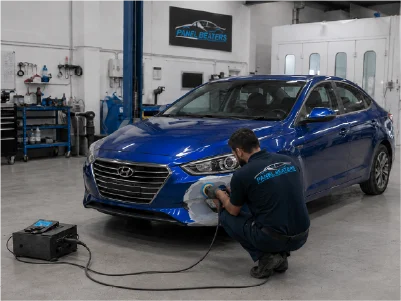
If your car needs repairs, our panel beater team in Perth can inspect the damage and give you a clear, honest quote.
Step 12: Look After Your Health & Understand Injury Claims
Even a low-speed vehicle accident can cause injuries that show up straight away. Symptoms of soft-tissue injuries, back pain, whiplash, and concussion may not appear until hours or days later.
Get an immediate medical checkup even if you’re feeling fine. There are two reasons for this. First, your health comes first, and sometimes injuries need early treatment. Second, a medical record of car accident victims should be created soon after the car crash and is valuable if you later need to make a claim.
Check for these symptoms:
- Neck, shoulder, or back pain.
- Headaches or dizziness.
- Pins and needles.
- Trouble sleeping or concentrating.
- Anxiety, nightmares, and reluctance to drive.
The last group matters, and it’s common after a car accident.
Making an injury claim: In WA, if you’re injured in a car crash and someone else is fully or partially at fault, you can make a claim through the Insurance Commission of WA under the state’s Motor Injury Insurance scheme. Strict time limits apply, and the process involves specific forms and requirements, so it’s worth getting advice earlier rather than leaving it. A lawyer who works in personal injury can explain your options and whether a claim makes sense in your situation.
Keep records of everything, including:
- Medical certificates, reports, and receipts.
- Time off work.
- Travel costs to appointments.
- Medication and treatment expenses.
Step 13: Special Situations
- Single vehicle crash (no other driver involved): If you hit a pole, fence, tree, or guardrail, you still need to report this accident if you cause damage to someone else's property and it costs more than $3,000. Take photos, contact your insurer, and if you damage a fence or property, try to find the owner or leave your details where they can find them.
- Hitting an animal: Kangaroo strikes are regular road hazards in Perth, WA, especially at dawn and dusk, and especially on roads outside the metro area. Call a wildlife rescue or DBCA Wildcare Helpline for guidance. Take photos to let your insurer know because many comprehensive policies cover animal collisions.
- Car park crashes: If you clip a parked car and the owner is not around, leave your details on a note in a place they’ll see it. Don’t just drive away.
- Crash in a work vehicle or company car: Notify your employer and follow their details straightaway.
- Crash in a hire or rental car: Contact your car rental company quickly.
- Crash with a cyclist or pedestrian: Check on them first and call 000 if there’s any serious injury.
- Crash involving a heavy vehicle: Call police and take extra care with documentation.
- Interstate or overseas drivers: Exchange details as normal and let your own insurer or the rental company know.
Keep Track of Everything
A car crash creates a lot of paperwork, and insurance claims may take longer than expected.
Keep a document on your phone including:
- Photos and videos from the scene.
- Police event or report number.
- Details of the other driver and any witnesses.
- Your insurance claim and the name of the person handling your claim.
- Quotes, invoices, and repair records.
- Medical reports and receipts.
- A log of calls and emails, including names, dates, and what was said.
Write things down step by step as they happen.
Frequently Asked Questions
Do I have to report a minor car accident in Western Australia?
It depends. If someone is injured, the property damage is over $3,000, or the owner of the damaged property is not there, you need to report it.
What if the other driver has no insurance?
If your policy allows it, you can make a claim through your insurer. Insurance claims through the Insurance Commission of WA operate differently, so get advice on your options.
Could making an insurance claim increase my premium?
It might, especially if you are at fault in a car accident. If the other driver is at fault, then your insurer can recover the cost from the other driver’s insurer, which can reduce the impact on your premium.
Can I leave the scene without exchanging any details if the accident is small?
No. It’s important to exchange details with the other driver, no matter whether the accident is minor or major.
Can I use the other driver’s recommended repairer?
No, you don’t have to. Ask your insurer about your options and choose a smash repairer or panel beater you trust across Perth, WA.
What are the time limits for making an injury claim?
Strict deadlines apply to injury claims. Speak to a lawyer or the Insurance Commission of WA as early as you can.
The Bottom Line!
Nobody wants to face a car accident in Perth, WA because it’s a stressful, confusing, and costly thing to handle. But by following this guideline with a clear answer on what to do after a car accident in WA- a step-by-step checklist- you can protect your safety, your claim, and your wallet. Stop the vehicle at the accident scene, check for injuries, make the scene safe, swap details, contact your insurer, and get ready to properly assess your damaged car. Look after your injuries as well. Save this checklist on your phone, and if anything happens, you have complete details on what to do next.