- 1300 513 461
- info@panelbeaters.net.au
- Unit 3 17A Yampi Way, Willetton WA 6155, Australia

Have Any Questions?
1300 513 461
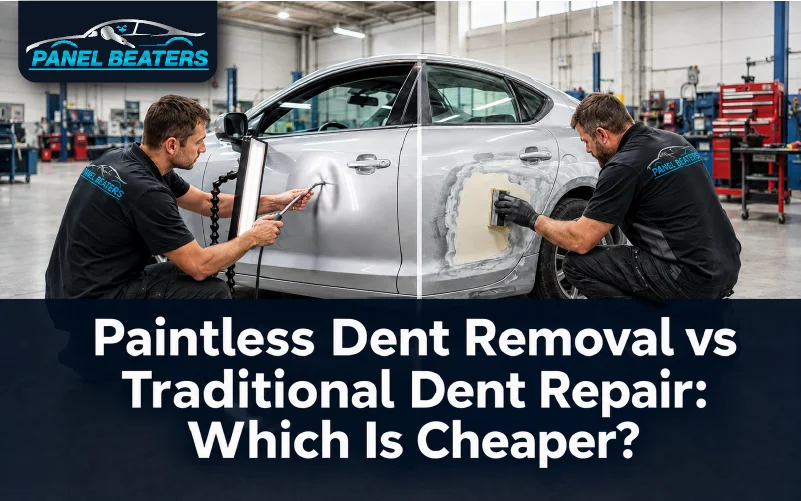
If you've ever got a dent in your car and you're weighing up your options, cost is usually the first question on your mind. Before booking panel repair services, it's worth understanding whether paintless dent removal or traditional dent repair solves the problem, considering all your car repair needs. In most cases, PDR comes out cheaper, but it is not the right fit for every type of dent removal on all makes and models. Here's a complete breakdown of how each method works, what actually drives the cost, and which one makes more sense for repairing dents on your vehicle.
What is Paintless Dent Removal?
Paintless dent removal is a repair technique that pushes, pulls, or massages a dent back into its original shape without cutting into the panel, sanding it down, or repainting it. Some technicians access the back of the panel (or use glue-pulling tools on the front for dents that are harder to reach) and carefully manipulate the metal until it returns to its factory-finished paint condition. Because the original layer is left completely untouched, there's no need for fillers, primers, or paintwork to avoid colour matching issues.
The PDR relies on:
- Metal rod pushing: Reshaping the dent from behind the panel.
- Glue pulling: Attaching a tab to the dent and carefully pulling the damaged area outward.
- Knockdown techniques: For high points that need gentle tapping down.
- Lever access tools: For reaching tight or awkward panel sections.
- Heat-assisted repairs: Softening the metal slightly for stubborn dents.
- PDR lighting & reflection boards: Used to spot every panel ripple so nothing gets missed.
Paintless Dent Removal (PDR) works best for shallow to medium dents where the paint hasn't cracked or chipped, including hail damage, door dings, shopping trolley dents, and minor low-speed bumps.
What is Traditional Dent Repair?
Traditional dent repair takes a more invasive approach. Unlike PDR, this method typically involves:
- Hammering or pulling the dent out (often leaving some imperfection behind).
- Applying body filler to smooth the area.
- Sanding the panel down to match the panel's original curve.
- Priming the repaired section.
- Repainting and clear-coating to blend it with the surrounding panel.
- Polishing and buffing for a factory-look finish.
This traditional dent repair is a more labour-intensive process and requires paint-matching equipment, a spray booth, and curing time. It's the go-to method for vehicle dents that are too sharp, too deep, or too close to a panel edge for PDR to handle. The technicians cannot avoid this method when the paint itself is damaged, cracked, or scratched down to bare metal.
PDR or Traditional Dent Repair: Which Is Cheaper
| Dent Size/Type | PDR Cost Range | Traditional Repair Cost Range |
|---|---|---|
| Small (door ding, coin to golf ball) | $50–$150 | $250–$450 |
| Medium (fist to dinner plate size) | $150–$300 | $450–$800 |
| Large/complex single panel | $225–$450+ | $800–$1,200 |
| Multi-panel / hail damage | $400–$700+ (severe cases can run much higher) | $1,000–$1,500 |
| Bumper damage | Often repairable for a few hundred dollars with mobile cosmetic repair | $1,200+ for dealership replacement |
Reminder: These are indicative prices only; it's highly recommended to contact professional panel beaters for the right vehicle assessment and repair quote based on your vehicle's specific dent damage.
Why Paintless Dent Repair Is Usually Cheaper
Less Labour, Less Time
A PDR technician can complete minor dent damage using the right repair method in 1–3 hours, or sometimes less, without any panel replacement and repainting. It covers different dent types, from low-impact fender benders to trolley and hail dents. Paintless dent removal is often the better choice than traditional paint-and-panel repair, which requires sanding, priming, painting, and clear-coat drying between steps.
No Paint or Material Costs
Full paint-and-panel repair is not cheap. Every panel needs colour matching, and on cars with faded or aged paintwork, achieving a seamless finish means extra coats, extra labour, and sometimes a full re-blend into neighbouring panels to prevent paint mismatching. PDR removes this cost entirely while ensuring the original paint stays intact. Whether your vehicle has small round dents or medium-sized dents, PDR is the best choice to reduce material and labour costs while delivering a clean, paintless result.
No Spray Booth or Curing Equipment Needed
Traditional repair relies on controlled-environment painting and drying time, which adds to overhead costs that get passed on to the customer. A spray booth, paint-mixing equipment, paint curing systems, and proper ventilation are all required to achieve a consistent finish. Paintless dent removal is significantly more affordable as it avoids these requirements entirely, reducing equipment and material costs while also eliminating the time associated with paint curing.
Often Cheaper Than Your Insurance Excess
For minor PDR repairs like shallow dents, door dings, minor hail dents, or single-dent jobs, the cost is often lower than your insurance excess, meaning lodging an insurance claim is not worth it at all. Paying for a small repair can avoid the excess payment and keep a minor dent from becoming severe cosmetic dent damage that requires insurance claims. PDR provides quicker dent fixes for small dents or minor aluminium dents while supporting factory paint retention.
When Traditional Repair Methods Cost More — But Are Necessary
PDR is quicker than conventional dent repair, but it's not always on the table. Whether it's severe dents that require structural repairs, major aluminium dents, dents with a cracked paint surface, many hail dents, or deep, creased dents, traditional repairs may be needed for a factory finish.
You require traditional repairs when:
- The vehicle paintwork is cracked, chipped, or damaged enough to expose the metal.
- The damage sits right on a panel edge, character line, or body seam.
- The dent has a fold or sharp crease rather than a smooth curve.
- Rust has already started forming in or around the dent.
- The metal has stretched or thinned, which cannot be repaired with PDR.
In these cases, paying for traditional repairs is not a bad deal. Trying to force a PDR fix on unsuitable damage can leave visible imperfections, paint mismatch, and surface issues that are more prone to future cracking.
How Dent Size & Location Affect the Price Gap
A panel repair shop in Perth decides dent removal pricing not only based on the suitable repair option — it heavily depends on where the dent sits and how big it is.
- Small dents (coin to golf ball size): This is where PDR has the biggest cost advantage. A door ding or small hail dent might cost a fraction of what a filler or repaint job would, simply because the labour time is short.
- Medium dents (fist to dinner plate size): PDR still tends to win on price here, but the gap narrows. Large surface area means more time massaging the metal back into shape, even without any paintwork involved.
- Large dents or multiple panels: Once a dent stretches across a wide area or involves several panels — common with hail damage after a storm — PDR pricing climbs, but it's still generally cheaper than a full repaint across the same panels.
- Hard-to-reach panels: Roof rails, tight door edges, and panels with limited backside access take longer for a PDR technician to work on, which can push the price closer to a small traditional repair job.
- Character lines and edges: Car dents that sit on or near the sculpted body line are not easy to repair with either method, but especially for PDR. A certified PDR technician requires great expertise to preserve the exact factory line while pushing the metal, which takes more time — so the cost increases automatically.
Hidden Cost Factors Worth Considering
- Turnaround time: Every day your car is off the road means lost work hours, rental car costs, or juggling public transport. PDR's faster turnaround often saves money indirectly, even when the invoice for a repair job looks similar to a traditional job.
- Mobile service savings: Many PDR providers are available to repair your car anywhere in Perth, whether it's at work, home, or any car park. It saves you money by cutting out the cost and hassle of arranging another vehicle from the car rental shop.
- Resale value: Cars with a clean paint history have higher resale value. A repainted panel can show up in vehicle history checks or be spotted by a trained eye during a vehicle inspection for sale. Using PDR helps keep your vehicle's original paint intact, which works in your favour long-term.
- Risk of poor paint matching: If a traditional repair doesn't blend perfectly with the surrounding panel, you may end up paying later for a full car respray — an added cost not included in the original quote.
- Insurance claim flow-on effects: Lodging a claim for a traditional repair can affect your no-claim bonus or future premiums, depending on your insurance policy. A PDR fix paid out of pocket often avoids this, helping you protect your no-claim discount.
Get an Accurate, Comprehensive Dent Repair Quote
The pricing for paintless dent removal completely depends on dent depth, size, location, and paint condition. Contact the professional shop to acquire a detailed dent repair quote by:
- Sending clear photos from multiple angles, including a close-up and a wider shot showing the dent on the car panel.
- Mentioning whether the paint is cracked or intact for the right choice of dent repair method.
- Noting whether the dent is on a flat section or near the body line or edge.
- Asking your repairer whether the quote includes an inspection to confirm PDR is suitable before starting any repair work.
Most reputable panel repairers will offer a free vehicle assessment, either in person or via photos, before locking in any final deal.
PDR vs Traditional Dent Repair: Which One Should You Choose?
- Go with PDR if: The dent is shallow to medium, the paint is not damaged, and you want an affordable dent repair fix.
- Go with traditional repairs if: The paint is cracked or chipped, the dent has a sharp crease, or it's located on the panel edge.
- Get an inspection as early as possible: A technician, after a detailed assessment, can quickly tell which repair method is suitable for your vehicle dent issue.
A Quick Comparison: PDR vs Traditional Dent Repair
| Factor | Paintless Dent Removal | Traditional Dent Repair |
|---|---|---|
| Average Cost | Lower — often $80–$400 depending on size and access | Higher — often $300–$1,500+ depending on panel and paintwork |
| Labour Time | Faster, usually same-day | Slower, may take several days for paint curing |
| Materials Used | Minimal — no filler, primer, or paint | Filler, primer, paint, clear coat |
| Paint Match Risk | None — original paint stays intact | Possible, especially on older or faded vehicles |
| Suitable For | Minor to medium dents, no paint damage | Deep, creased, or paint-damaged dents |
| Resale Impact | Positive — no repaint history | Neutral to negative if paint match is imperfect |
Frequently Asked Questions
Is PDR always cheaper than traditional dent repairs?
No, paintless dent removal is often cheaper than traditional dent repair when the dent is small or moderate, the vehicle's original paint is intact, and the panel has not suffered severe metal deformation. PDR requires fewer materials and completely avoids processes such as filling, sanding, priming, and repainting. If your vehicle has paint chips or cracked paint, traditional repairs are required.
Can PDR be used for any type of vehicle dents?
No, PDR is most suitable for shallow to moderate dents where the original paint remains intact. Common examples include car park door dings, shopping trolley dents, minor hail damage, and small dents caused by low-speed impacts. If the dents are deep, sharply creased, stretched, located on panel edges, or have chipped or cracked paint, traditional paint-and-panel repair may be required.
How long do PDR and traditional repair methods take?
A small and minor dent repair may take only a few hours. Larger dents may need one or two days for repair, depending on the vehicle damage. Traditional repairs may take longer. It's highly recommended to contact a professional repairer for an accurate dent repair timeline.
Will my insurance cover dent repairs?
Coverage varies depending on the type of insurance policy, the cause of the damage, and your level of cover. A comprehensive insurance policy may cover accidental vehicle damage, including certain dents, but you will generally need to contact your insurer to understand your specific policy terms and conditions.
Can a dented vehicle panel need replacement?
Yes, panel replacement may be necessary when the vehicle damage is too severe to repair effectively. This can happen when the metal is badly stretched, torn, heavily creased, or damaged around mounting points. A technician may also recommend replacement if the existing panel is too expensive to repair effectively.
Can PDR repair dents with cracked or damaged paint?
Generally, PDR is most suitable when the original vehicle paint is intact. If the impact has cracked, chipped, peeled, or removed the paint, traditional panel repair is required to restore the finish of your vehicle. This may involve filling, sanding, priming, colour matching, and repainting the affected area.
Is PDR suitable for aluminium car panels?
Yes, PDR is suitable for removing minor dents from aluminium panels, but it requires specialised equipment. Aluminium behaves differently from steel because it is more flexible and can be more difficult to reshape without causing additional damage.
The Bottom Line!
For the majority of everyday dents — hail damage, door dings, shopping trolley knocks, minor bumps — paintless dent removal is the suitable choice. It's an affordable option compared to traditional repair methods, which are suitable for removing deep, creased, or paint-damaged dents. PDR costs less because it uses specialised rods and tools rather than the materials involved in traditional repairs such as filling, sanding, priming, and repainting.
Pro Tip: The smartest approach is to get your dent assessed by a specialised panel repair team and let the condition of the panel point you in the right direction.